
For most renters, the default way to pay rent is still bank transfer, standing order or Direct Debit. In the UK especially, landlords and letting agents tend to prefer automated bank payments because they’re cheap, reliable and easy to reconcile.
Paying rent with a card — especially a debit card — is possible, but it’s not always offered and not always the smartest choice. It usually depends on whether:
If they do, you can absolutely pay rent by debit card — and if you split rent with a partner or housemates, you can make this even smoother (and fairer) by paying your rent with Cino. Cino is a shared virtual card that splits bills automatically, deducting everyone's share from their own bank cards when you pay.
Want to see exactly what you owe? Try our free rent split calculator before you download the app.
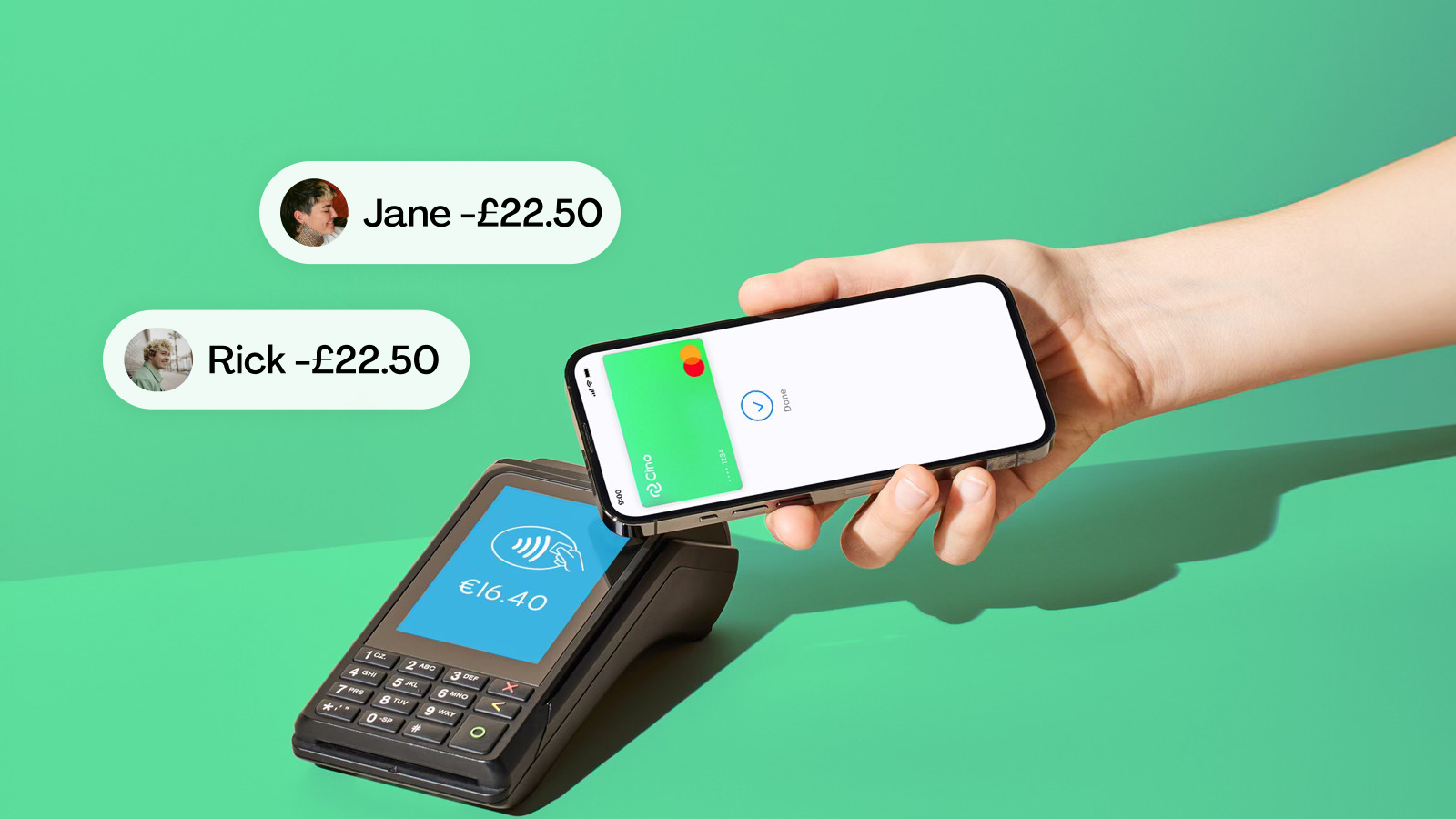

Let’s break down the options,alongside the pros and cons.
Short answer: sometimes.
It depends on how your landlord or agent has set things up.
Some letting agents now accept rent by debit or credit card, either:
This is still less common than Direct Debit or bank transfer, but it’s growing as agencies modernise their payment systems.
There are also dedicated services that let tenants pay rent with a card — for example, UK platforms like Payr, which let you add a debit or credit card and then pay your landlord or agent via the platform.
Behind the scenes, the platform charges your card and sends your landlord a bank transfer, so from your landlord’s perspective it still looks like a normal payment.
Card payments cost more to process than bank transfers. Transaction fees of 1–3% are common for card payments, and many landlords don’t want to absorb that cost — so either they avoid card payments altogether, or they pass the fee on to tenants as a “convenience fee.”
So if you’re wondering “Can I pay rent debit card every month?” the honest answer is: only if your landlord or rent platform supports it, and often with an extra fee attached.
Before you switch, it’s worth understanding the trade-offs.
✅ Convenience
You can pay online, often instantly, without setting up a new bank transfer each time.
✅ Faster processing
Debit card payments usually clear quickly, which is useful if you’re close to the due date.
✅ Possible rewards
Some banks now offer rewards or cashback on debit card spending, so using your card for rent could earn small perks.
✅ Easy to track
All your big monthly outgoings sit together in your card transaction history, which some people find easier to manage.
⚠️ Fees
Many platforms or agents charge a card processing fee (often 1–3% of your rent). On a £1,200 rent, that’s £12–£36 a month just for the privilege of paying by card.
⚠️ Not universally accepted
It still isn’t common for UK landlords to accept rent via debit or credit card directly, especially private landlords.
⚠️ Overdraft risk
Since a debit card is linked to your current account, there’s a risk of slipping into an expensive overdraft if you misjudge your balance.
If you’re going to pay rent with a debit card, it needs to be intentional: you understand the fees (if any), you know your landlord accepts it, and it fits your budgeting style.
So far we’ve talked about how to pay rent with a debit card. But things get even more interesting when you’re splitting rent with other people.
If you live with a partner or housemates, there are really two separate problems:
Cino focuses on solving the second problem brilliantly — and it works beautifully with debit cards.
Cino is a bill-sharing app that uses a shared virtual card to split payments automatically.
No IOUs, no “I’ll transfer you later”, no spreadsheets. Just instant, automatic splitting.
If your landlord or letting agency accepts card payments (either directly or via a rent platform), you can:
From your landlord’s view, they simply receive a standard card payment.
From your group’s view, the rent is split fairly and automatically.
That’s the key: you’re not just figuring out how to pay rent debit card, you’re solving the much bigger headache of how to split rent without chasing anyone.
People using Cino with their debit cards for rent and bills usually highlight the same wins:
No one fronts the full rent
You no longer have one person paying the entire amount and waiting for everyone else to pay them back.
No awkward chasing
Because everyone’s share is taken automatically when the payment is made, you never have to nag a housemate to send their part of the rent.
Fair by design
You can set custom split ratios (50/50, 40/30/30, etc.) so each person pays exactly what they should, every single month.
Everything in one place
Rent, utilities, broadband, cleaners, shared shops — all can be paid with the same shared card, using each person’s own debit card behind the scenes.
Keeps your budgeting simple
You still see the rent and bills go out from your own bank account (via your debit card), so it’s easy to track your monthly outgoings.
If your landlord gives you the option to pay rent by debit card, using Cino on top turns it from a simple payment method into a fully automated rent-splitting system.
A quick reality check: many landlords still don’t accept card payments for rent at all. They’ll only take:
In that case, you can’t force a “pay rent debit card” setup — but Cino can still help with the splitting part.
You might use:
Or, if your landlord is open to it, you can send them information about card-based rent platforms they could adopt — many of which support debit card payments and automated rent collection.
To sum up:
Where it really shines is when you combine it with Cino:
So if you’ve been googling “pay rent debit card” and trying to figure out how to make it work in a shared home, the answer is:
Find a landlord or platform that accepts card payments —
then let Cino handle the splitting for you.
.png)


